About the Event
Ancient Florida, Right in Your Backyard
The Annual Shark Tooth Fossil Hunt is one of the most beloved community events on the Trails of River Hills calendar. Families wade into the shallow Alafia River and sieve through the gravel and sediment on the riverbed — turning up fossilized shark teeth, ray plates, and other prehistoric remains that have been washing out of the river banks for thousands of years.
The Alafia River watershed sits atop ancient marine deposits from the time when much of Florida was submerged beneath a warm, shallow sea. The river slowly exposes these fossils year-round, but the annual hunt gives the whole community a chance to get in the water together and see what turns up.
The event is free and open to all River Hills residents and members. No experience needed — just a sense of adventure and a willingness to get wet.
The Finds
What You Might Discover
The Alafia River is one of Florida's best-known fossil rivers. The teeth found here come from ancient sharks that swam these waters millions of years ago — long before River Hills existed, long before Florida looked anything like it does today.
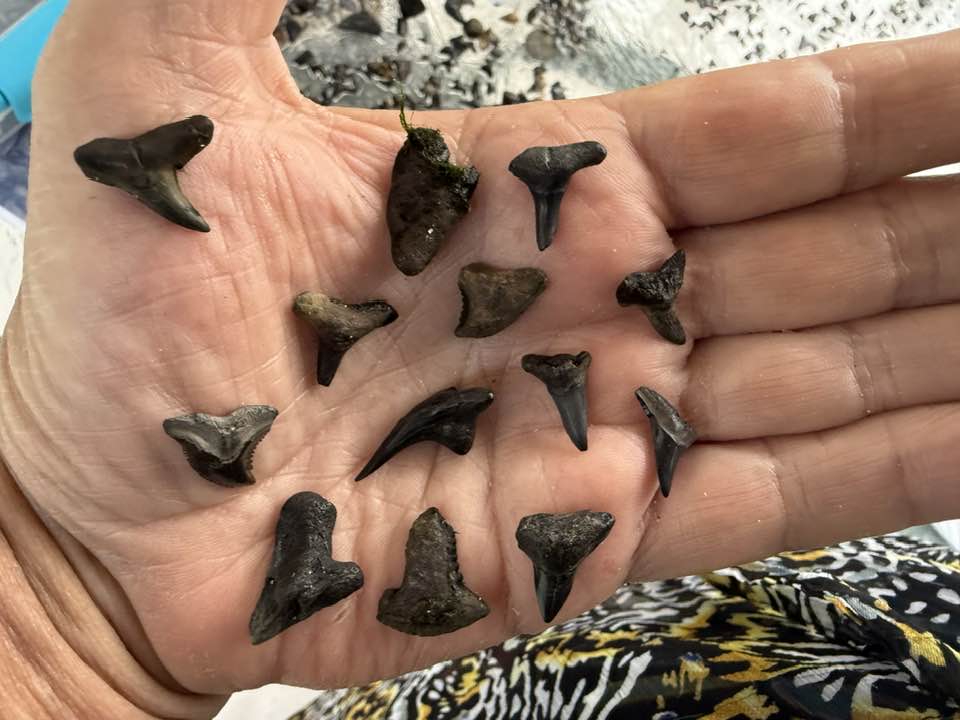
Most finds are small, dark-colored shark teeth ranging from a few millimeters to over an inch — mineralized over millions of years and turned jet black or dark brown by the sediment they've been buried in. Experienced hunters also turn up ray plate fragments, fish vertebrae, and occasional mammal bones.
Every handful of gravel is a lottery ticket — and the river never runs out of fossils to share.
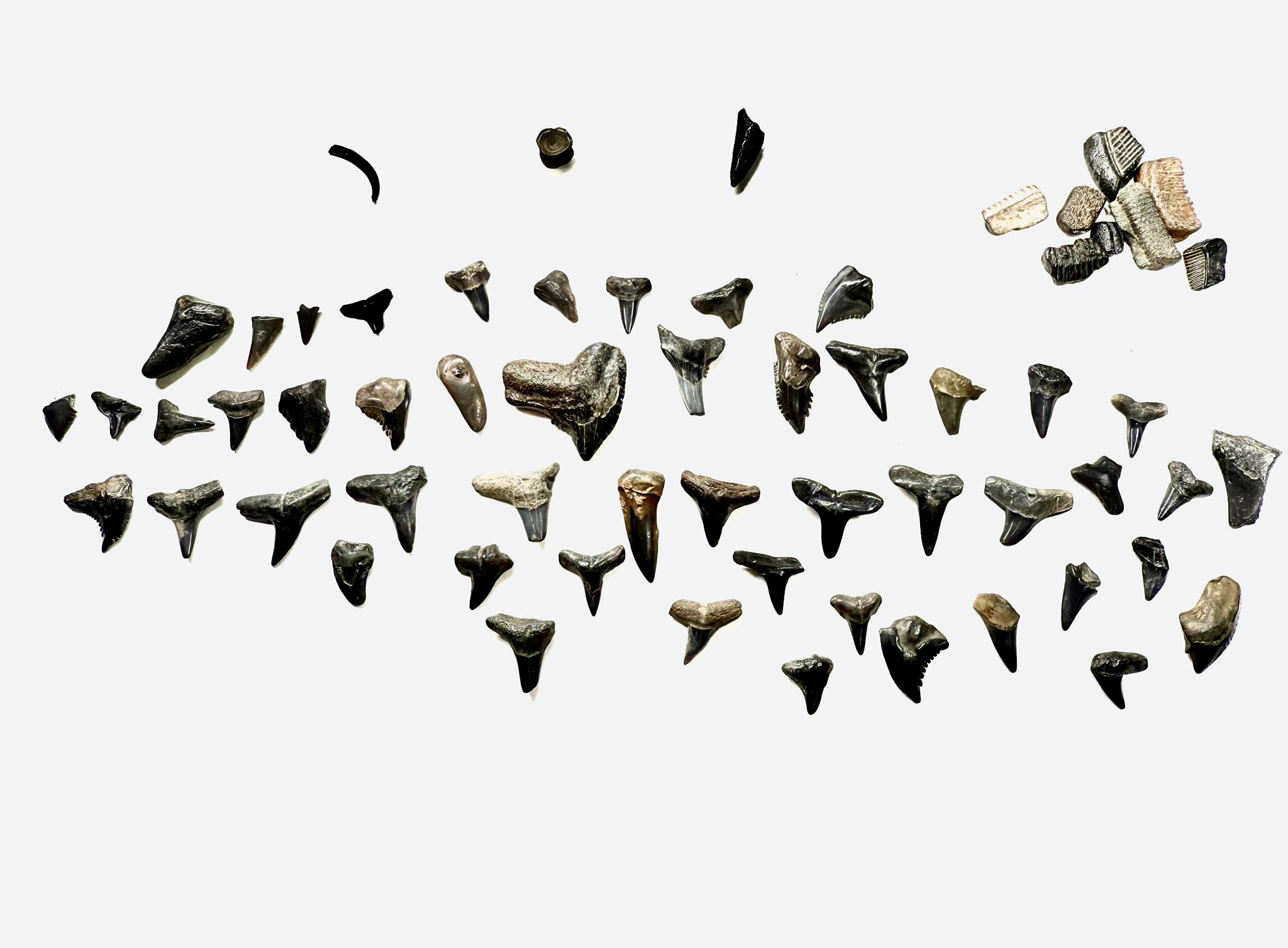
🦈 Why Are There Shark Teeth in a Florida River?
Millions of years ago, the land that is now central Florida was the floor of a warm, shallow sea teeming with sharks, rays, and other marine life. As sea levels changed over time, Florida emerged from the water — but the fossils left behind in the sediment remained.
The Alafia River cuts through these ancient deposits as it flows, continuously eroding the banks and releasing fossils that have been buried for millions of years. The tannin-stained water and sandy gravel riverbed create ideal conditions for finding them — especially in winter and early spring when water levels are low and the river runs clear and shallow.
Event Details
When & What to Bring
The hunt is typically held in winter or early spring, when the Alafia is at its shallowest — usually only a couple of feet deep — and the water runs clearer. This makes wading easy and fossils easier to spot in the gravel.
Monitor the Trails of River Hills Facebook page for exact dates and event announcements. The event is free and open to all River Hills residents and River Hills Country Club members.
Be Prepared
What to Bring
Shoes You Can Get Wet
Water shoes, old sneakers, or sandals with a strap. The riverbed is rocky and uneven in spots — bare feet are not recommended.
A Sieve or Strainer
A mesh sieve, colander, or dedicated fossil screen lets you scoop up gravel and wash away the sand and sediment to reveal what's hiding inside.
A Small Shovel or Scoop
A garden trowel, small shovel, or even a plastic cup works well for scooping riverbed material into your sieve.
Sunscreen
You'll be in the open water for a while — Florida sun is no joke, even in winter. Don't forget sunscreen and a hat.
Water & Snacks
It's easy to lose track of time once the teeth start turning up. Bring water and something to snack on, especially for little ones.
A Container for Your Finds
A small zip-lock bag, plastic jar, or film canister is perfect for safely storing your teeth for the trip home.
Gallery
Event Photos
The Hunt in Full Swing
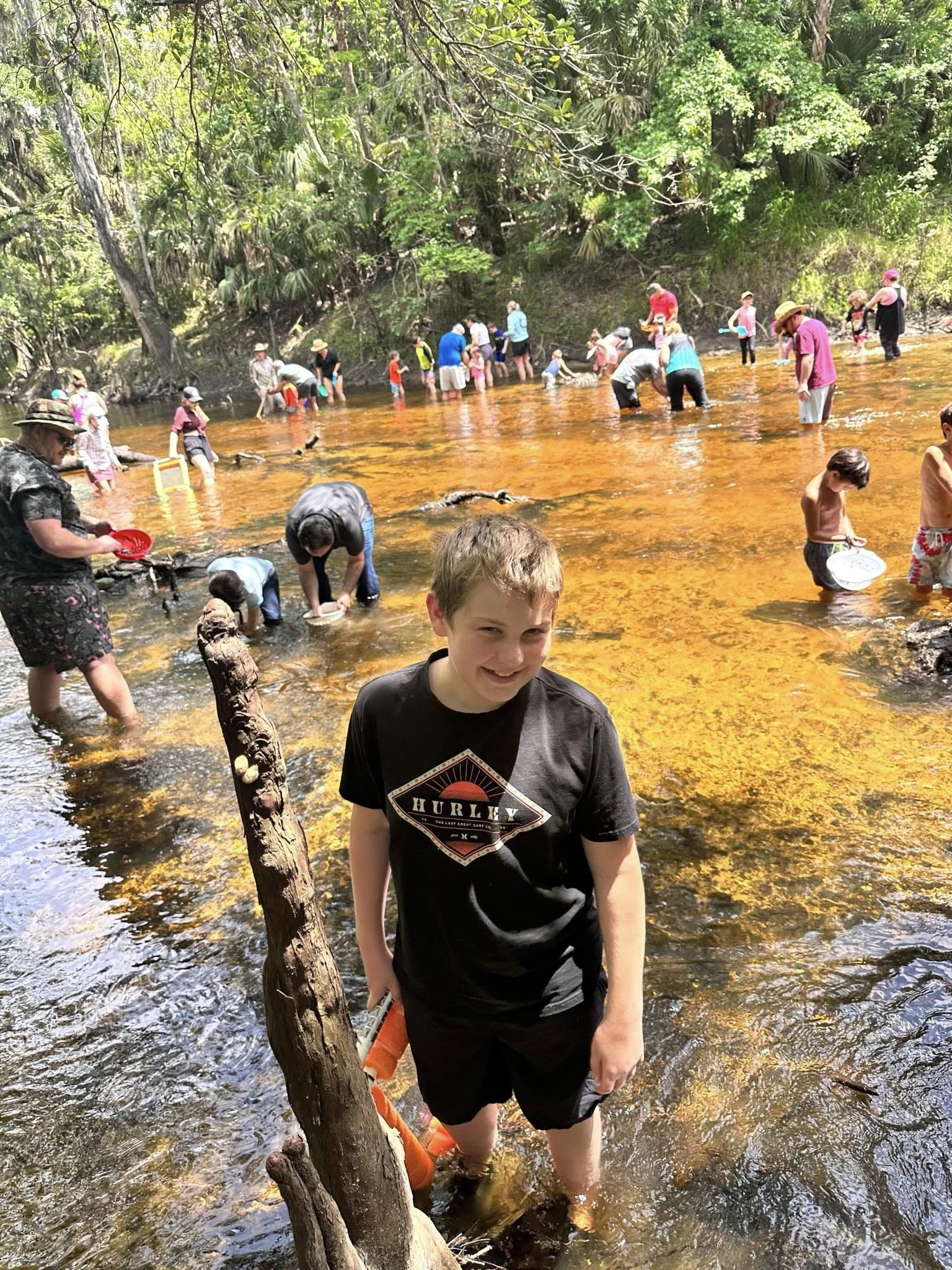
The whole community out in the river together — one of the best-attended events of the year.
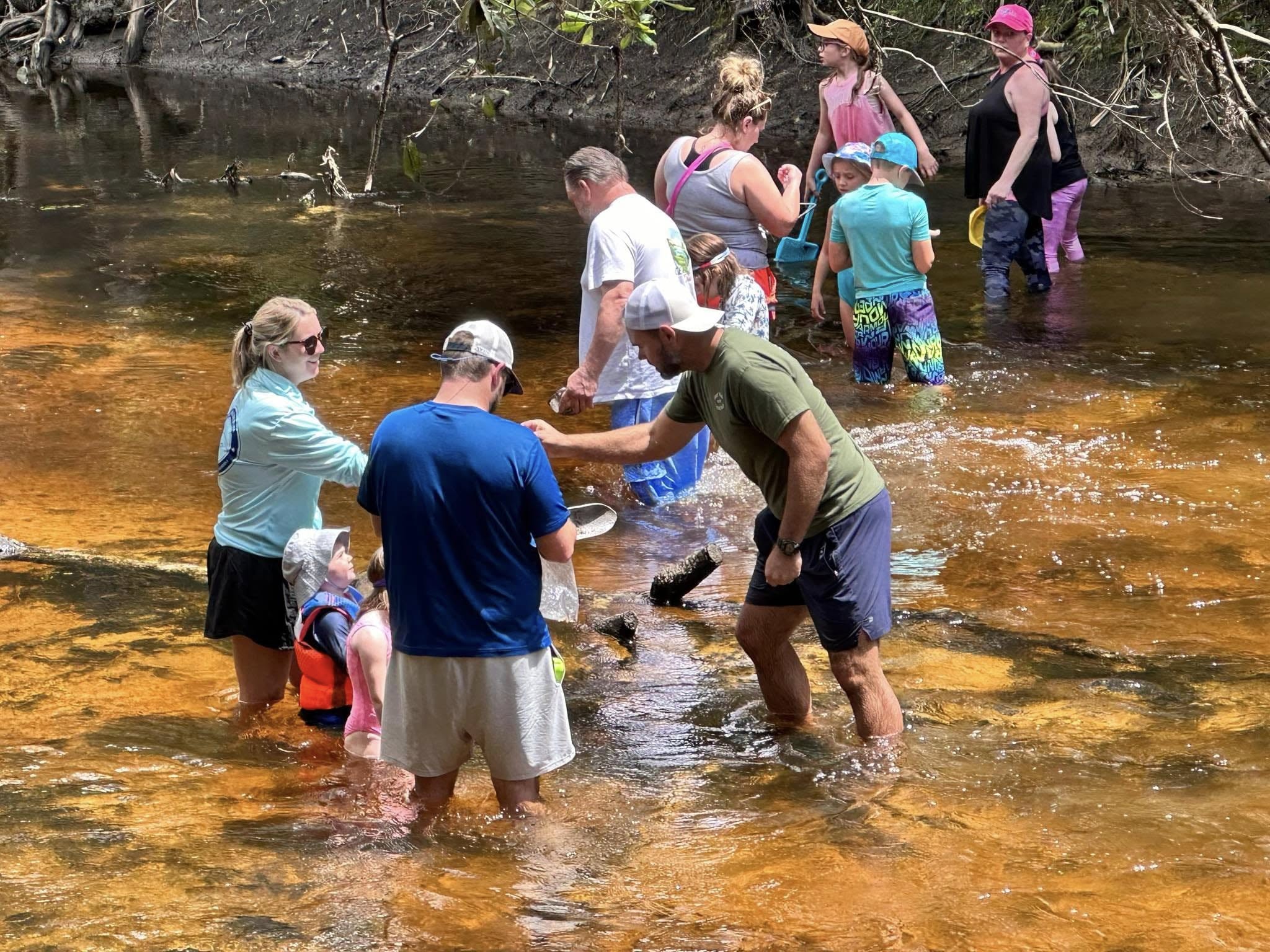
Families in the Water
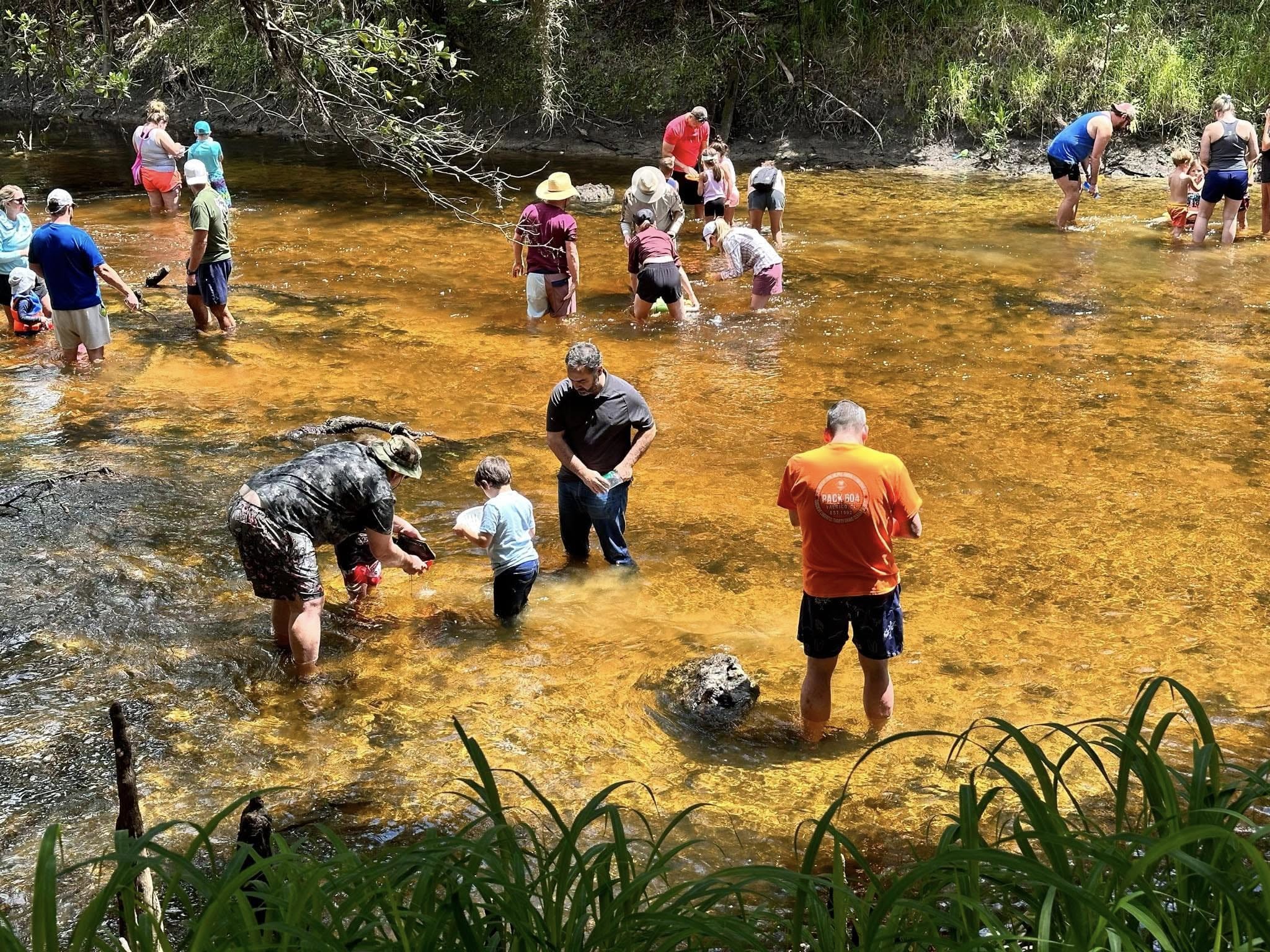
A perfect family outing — the shallow water makes it safe and accessible for all ages, including very young children.
Everyone in the River
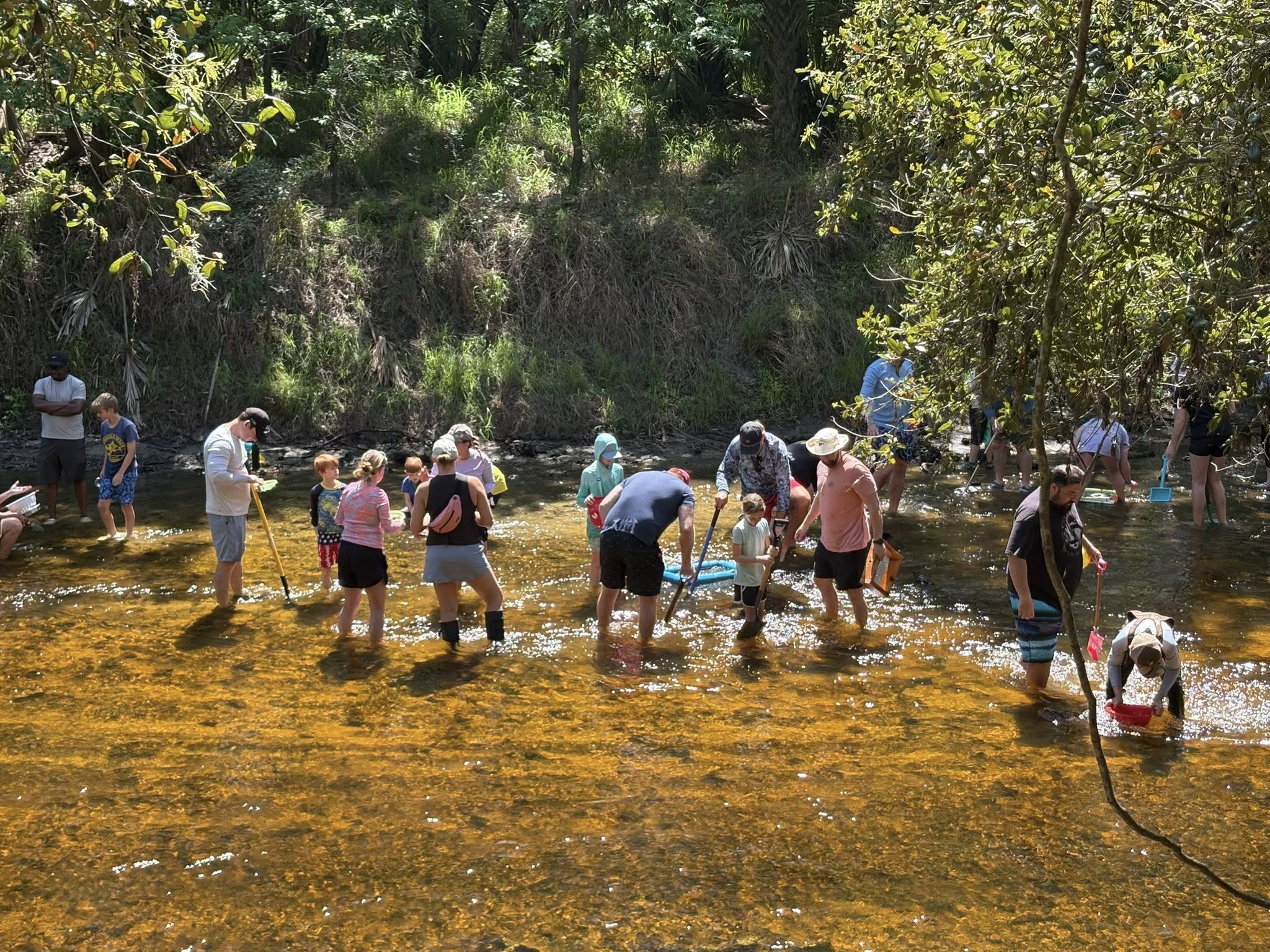
Shovels, sieves, and sunshine — the whole river turns into a fossil dig for the day.
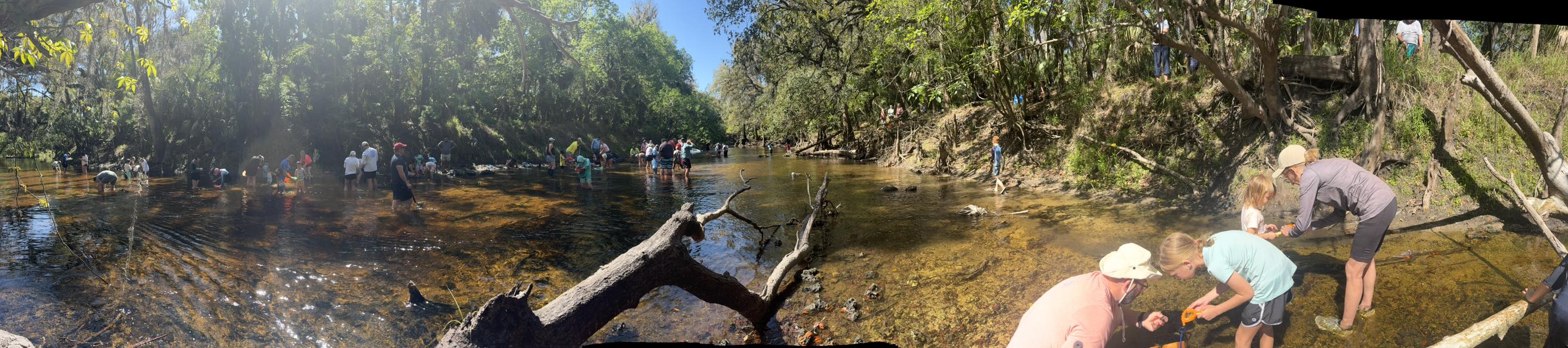
Panoramic View — The Full Scene
A panoramic view of the river on hunt day — from the fallen logs to the tree line, the entire stretch fills with fossil hunters.